





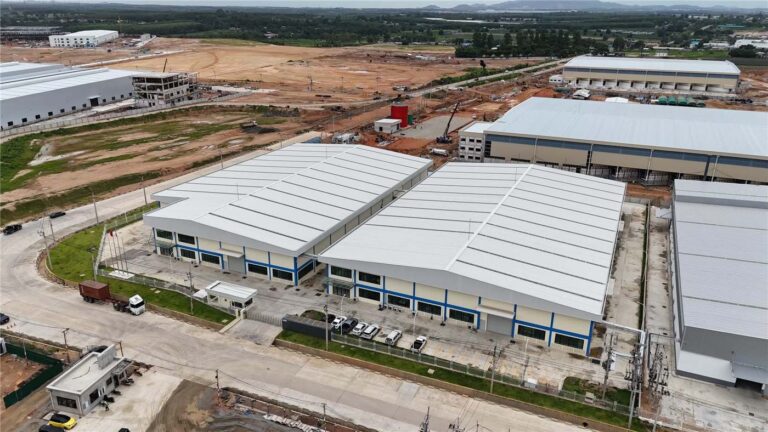
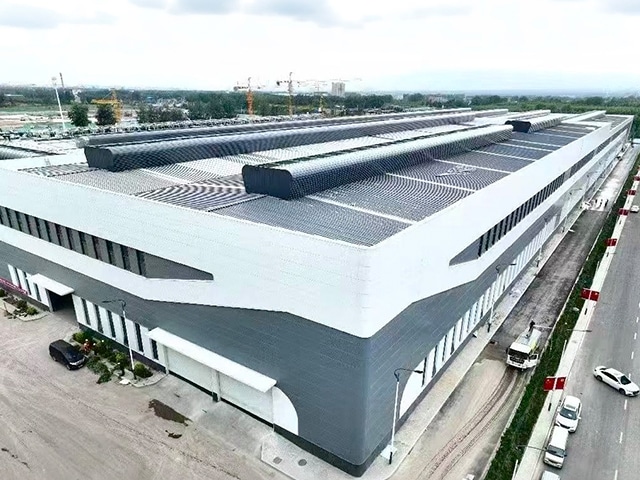
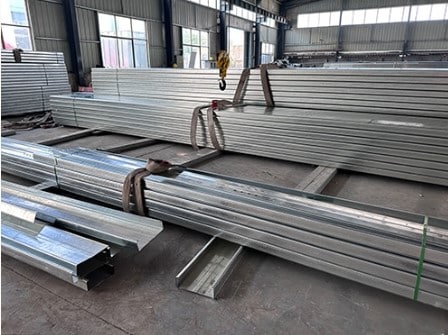
Choose KERUI Metal color-coated steel sheet by matching its complete layer system and formed profile to the project, not by choosing a color and thickness from a catalogue. A dry interior liner, a sun-exposed facade and a coastal roof may all use prepainted sheet, but they do not place the same demands on the metallic coating, paint, profile, fasteners or maintenance plan.
A useful comparison starts with location and exposure, then checks loads, support spacing, appearance, cleaning and the evidence required at delivery.
What Are You Actually Selecting?
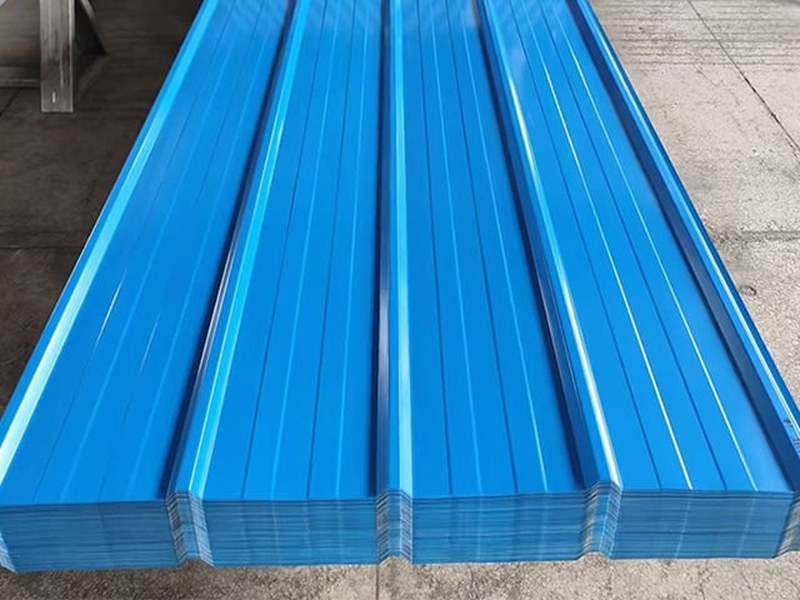
Color-coated steel sheet is a layered product. Coil coating applies paint or another coating material to metal strip in a continuous process before the strip is cut and formed. A typical engineered steel panel combines a steel substrate, a metallic protective coating, pretreatment, primer, finish coat and reverse-side backing coat.
The substrate provides the base mechanical properties. A zinc or zinc-based metallic coating separates the steel from the environment and can protect small exposed areas sacrificially. Pretreatment and primer support adhesion and corrosion protection; the finish coat controls color, gloss and weathering; the backing coat protects the reverse face.
This is why two sheets with the same color and nominal thickness can perform differently. A useful quotation must identify the substrate, metallic coating, front and back paint system, profile and thickness basis rather than reduce the product to a color code.
Which Project Conditions Change the Choice?
For a normal exterior wall, review ultraviolet exposure, rain, humidity, color retention and openings. A visible facade also needs a physical color sample, agreed gloss and batch control because screens are unreliable acceptance references.
A roof adds drainage and structural questions. Its profile must suit the slope, support spacing, wind uplift, snow load, lap direction and penetrations. Fastener patterns, washers and flashings are part of the system; coating cannot compensate for an unsuitable profile or leaking joint.
At coastal, humid and industrial sites, salt, repeated wetting and airborne chemicals can accelerate deterioration at edges, scratches, laps and fasteners. Define the corrosion environment, then specify a compatible metallic coating, paint, accessories and repair procedure. “Outdoor grade” is too vague.
Interior liners face less direct weather, but reverse-side coating, humidity, cleaning agents and condensation still matter. Agricultural or process buildings may expose the inside face to moisture or chemicals. For temperature-controlled spaces, a single sheet is only a skin; insulation, vapour control, air sealing and thermal bridges require a separate envelope design.
How Should You Compare Coating Systems?
Coil-coating lines can apply polyester, plastisol, polyurethane, PVDF, epoxy and other systems. These are families, not identical performance packages: formulation, primer, film build, pretreatment, color and test standard affect the result.
| Coating information | What it can indicate | What still needs verification |
| Polyester system | A widely used coil-coating family for painted metal | Exact grade, UV and corrosion data, film build and approved exposure |
| PVDF paint | A fluoropolymer paint associated with strong gloss and color retention | Declared formulation, test standard, color limitations and project suitability |
| Plastisol, polyurethane or epoxy | Other available coil-coating families with different processing and service properties | Intended face, forming limits, chemical compatibility and weathering data |
| Generic “painted steel” | Only that an organic finish is present | Substrate, metallic coating, pretreatment, primer, topcoat and backing coat |
Compare declared results under the same standard and against the actual exposure. Color-retention data alone does not prove cut-edge corrosion performance, forming tolerance or sealant compatibility.
How Do Thickness, Profile and Supports Work Together?
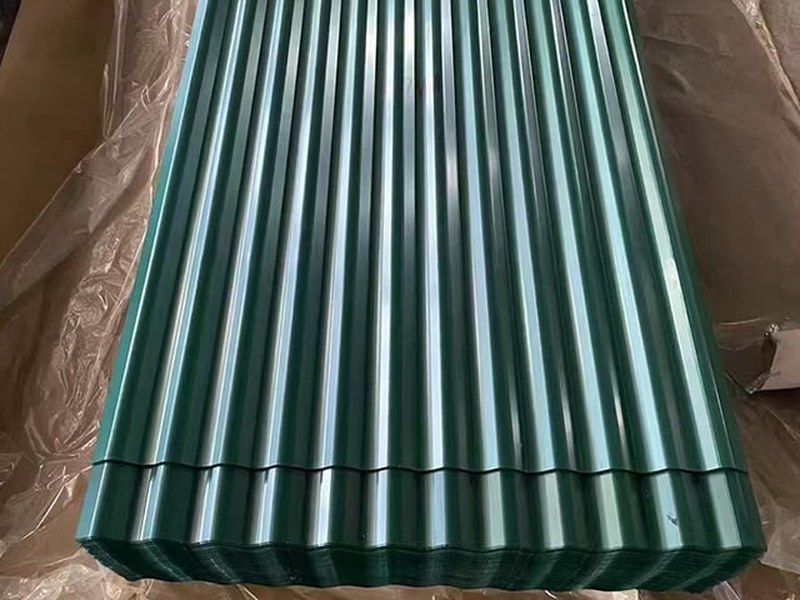
The current color-coated steel sheet range lists metal-sheet thicknesses from 0.3 to 0.8 mm. This is an availability range, not a universal rule. Selection depends on steel properties, profile geometry, cover width, supports, fasteners, handling length and design loads.
Profiling gives a thin sheet much of its stiffness, so rib geometry can matter as much as base-metal thickness. Confirm the quoted thickness basis and compare it with load/span data. A thicker sheet does not rescue an unsuitable profile, and a wall profile should not move to a roof without checking drainage, laps and capacity.
Forming also matters. Tight bends, unsuitable tooling or damaged rollers can crack or abrade the coating. Flashings with small bend radii should be reviewed separately from the main panel, especially when the same coil will be formed into several shapes.
Is Color-Coated Steel Sheet Cost-Effective?
It can be, but total installed cost matters more than sheet price. Compare usable cover width, supports, transport, lifting, waste, accessories, installation, inspection and maintenance. A cheaper sheet can cost more if it needs extra supports, has poor dimensional control or creates repeated repairs.
Low weight, formability and factory-applied finishes can simplify transport, installation and site painting. Correct detailing and handling remain essential: wet storage, metal swarf, overdriven fasteners or incompatible accessories can erase the saving.
Environmental claims also need restraint. The steel substrate can enter established metal-recycling streams where suitable facilities exist, but coatings, contamination and local collection rules affect recovery. Avoid treating “recyclable” as proof that every project automatically has a lower environmental impact.
Which Configuration Fits Each Project Type?
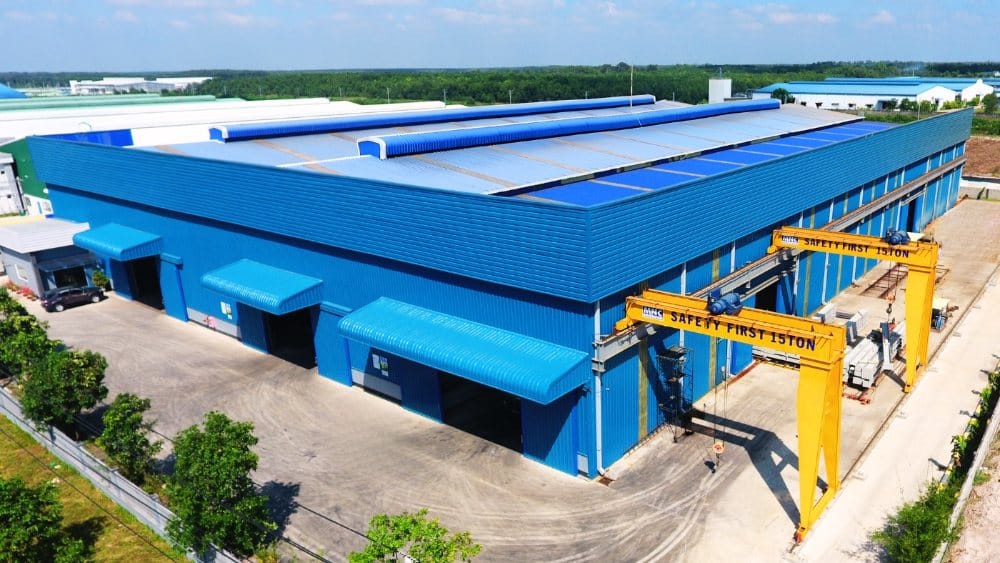
Use the following matrix to narrow the selection before requesting final project calculations or product data.
| Project condition | Selection priority | Evidence to request | Common mistake |
| General exterior wall | UV/color performance, wall profile, openings and batch consistency | Layer description, color sample, profile drawing and test declarations | Choosing by color code only |
| Weather-exposed roof | Drainage, uplift/snow loads, supports, laps, fasteners and flashings | Load/span data, roof details, coating declaration and inspection plan | Treating a wall profile as a roof profile |
| Coastal or high-humidity building | Metallic coating, paint system, edges, fasteners and reverse face | Exposure classification, coating data and compatibility records | Relying on the phrase outdoor grade |
| Industrial or agricultural enclosure | Pollutants, internal humidity, cleaning and condensation | Chemical/cleaning limits, envelope details and approved accessories | Reviewing only the outside face |
| Appearance-sensitive facade | Color, gloss, texture, batch control and forming quality | Physical sample, batch plan and representative formed piece | Approving from a screen image |
The matrix cannot prescribe one grade because loads, corrosion categories and local standards differ. It shows which decisions change with the application.
What Should Be Checked After Selection?
At delivery, match product ID, profile, color, batch, length, cover width and thickness method to approved documents. Inspect surfaces, edges, film and bundles for transit or trapped-moisture damage, and verify the accessories.
During installation, remove cutting swarf, avoid uncontrolled substitutions and isolate damaged sheets. Cleaning methods and inspection intervals should follow the declared coating system and exposure; harsh chemicals or poorly controlled high-pressure washing can damage a finish. Maintenance is most effective when scratches, loose fasteners, sealant failure and drainage problems are found before corrosion spreads.
Conclusion
The color-coated steel sheet is not one universal grade. It is a matched system: substrate, metallic coating, paint layers, profile, thickness, supports, fasteners and details chosen for a defined environment and use. Start with exposure and application, compare coating evidence, check profile/load compatibility, and evaluate total installed cost rather than appearance or sheet price alone.
FAQ
Is color-coated steel sheet the same as galvanized steel sheet?
No. Galvanizing applies a protective zinc coating to steel. Color-coated sheet adds an organic coating system over a prepared metallic-coated substrate. The full layer description distinguishes the products.
Is PVDF always better than polyester?
No. PVDF paints are associated with strong gloss and color retention, but suitability still depends on formulation, exposure, forming, color, specification and cost. Compare declared data under the project’s required standard.
Is 0.8 mm always the strongest choice in the listed range?
Thickness contributes to capacity, but profile geometry, steel properties, support spacing, fasteners and loads act together. Use project calculations and profile load/span data rather than thickness alone.
Can one sheet specification cover both roofs and walls?
Only when the design verifies both uses. Roofs add drainage, lap and uplift requirements; walls emphasize wind pressure, openings and appearance. Separate profiles or details may be necessary.