
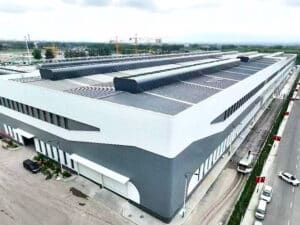
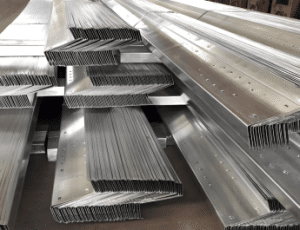
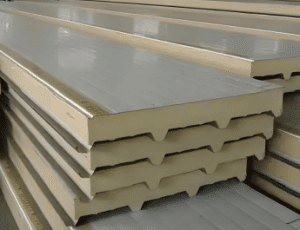
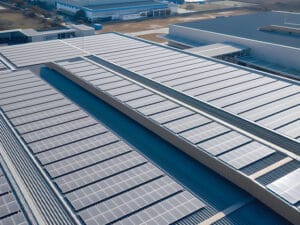






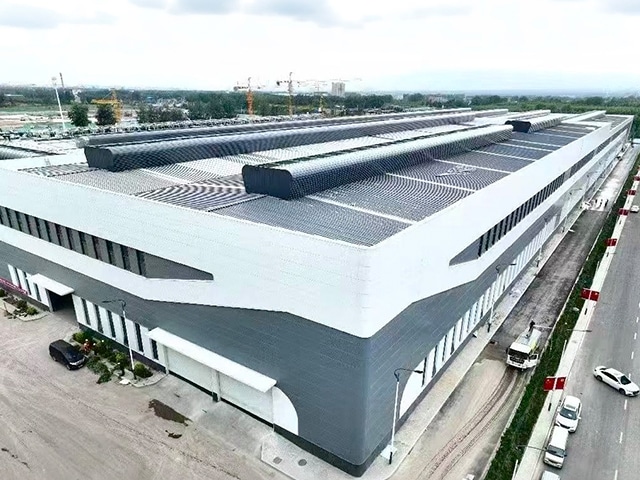
A purchase order that lists only color and thickness leaves the most important performance decisions unresolved. For an industrial factory or warehouse, buyers need a coated-sheet specification that connects the site environment, roof or wall duty, metallic coating, paint system, profile, dimensions, and inspection evidence. That common baseline makes quotations comparable and reduces substitutions that appear equivalent on paper but behave differently in service.
Define the Exposure Before Naming the Sheet
The service environment should lead the specification because the same panel can face very different risks. Record whether the building is inland, coastal, humid, industrial, agricultural, or exposed to process chemicals. Also separate external weathering from internal exposure: condensation, washdown, fumes, and trapped moisture can attack the reverse face even when the outside looks undamaged.
The location of the panel then narrows the duty. Roofs experience standing water risk, solar heat, maintenance traffic, and more demanding drainage details; walls usually have different span and impact conditions. A color-coated steel sheet should therefore be identified by roof zone, wall elevation, canopy, soffit, or internal liner rather than treated as one undifferentiated material.
Record the project conditions
- Site atmosphere and distance from marine or industrial contaminants.
- Roof slope, drainage route, expected condensation, and internal humidity.
- Required design life, access for inspection, and cleaning or washdown regime.
- Contact with incompatible metals, wet insulation, treated timber, or aggressive chemicals.
Write the Material Stack in the Right Order
The material stack should be stated layer by layer: steel substrate, metallic coating, pretreatment, primer, exterior topcoat, and reverse-side coating. Calling a product simply painted galvanized sheet does not establish the coating mass, paint chemistry, film build, or backside protection. Name the governing product standard required by the project, such as ASTM A755/A755M or EN 10169, and request supplier documentation against that stated basis.
Separate steel thickness from coating thickness
The thickness definition must be unambiguous. State whether the quoted value is base metal thickness or total coated thickness, then define permitted tolerance through the governing standard. This distinction matters when panel capacity, fastener pull-over resistance, deflection, and coil weight are compared. A nominal number without its measurement basis can conceal a thinner steel core.
Match the coating system to exposure
The metallic and organic coatings work as a system, so neither should be selected in isolation. For a prepainted steel sheet, specify the metallic coating type and designation, exterior and reverse paint systems, nominal dry-film thicknesses, color reference, gloss range, and any durability evidence required for the exposure. Confirm cut-edge and touch-up procedures separately because factory-applied coating cannot protect damaged areas after handling.
Lock the Profile and Finished Dimensions
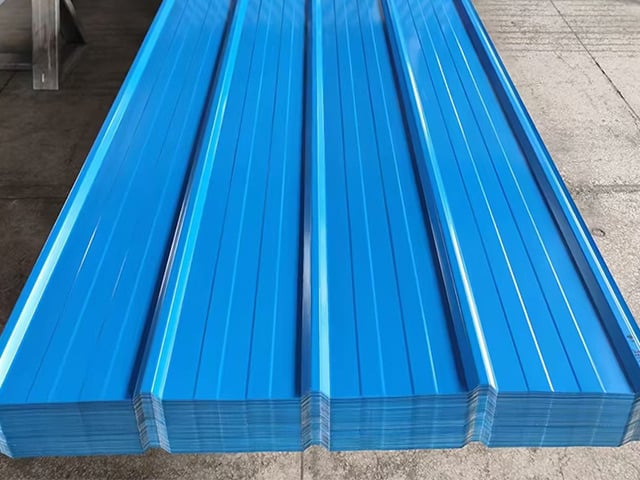
The finished profile controls more than appearance. Rib depth, pitch, crest geometry, effective cover width, side-lap arrangement, and sheet length affect drainage, spanning behavior, fastener layout, and order quantity. The specification should reference an approved profile drawing instead of relying on a marketing name that may differ between roll-forming lines.
At KERUI Metal, we offer sheet products for factory and warehouse roof and wall coverings, with stated metal-sheet thicknesses from 0.3 to 0.8 mm. That range is a starting point, not an automatic project selection: our proposal should identify the final thickness basis, profile, supports, fasteners, and project-specific design checks for the intended building zone.
| Specification field | What the RFQ should state | Why it matters |
| Use and exposure | Roof, wall, liner, site atmosphere, internal conditions | Sets the durability and detailing basis |
| Material stack | Substrate, metallic coating, pretreatment, primer, topcoat, back coat | Prevents incomplete material descriptions |
| Thickness | Base metal or total coated basis plus tolerance standard | Makes capacity and weight comparisons valid |
| Profile | Approved drawing, rib geometry, pitch, effective cover width | Controls drainage, laps, supports, and quantities |
| Finish and evidence | Color, gloss, film build, test reports, sample approval | Aligns appearance, durability, and acceptance |
A prepainted corrugated steel sheet schedule should also list cut lengths, quantities by elevation or roof zone, tolerances, lap direction, closures, flashings, sealants, and compatible fasteners. These details keep the panel order aligned with the erection drawings and reduce site cutting, exposed edges, and mixed batches.

Make Approval and Inspection Measurable
Approval should happen against a controlled submittal, not a loose sample. For steel building roof panels, require the supplier to submit the coil or sheet designation, profile drawing, thickness basis, coating details, color sample, compatible accessories, packing method, and traceable inspection records before production release.
Incoming inspection should check labels and documents before opening bundles, then verify representative thickness, dimensions, profile geometry, color, surface condition, and quantities. Record damage immediately and protect sheets from water trapped between nested panels. Acceptance criteria should distinguish minor handling marks from exposed substrate, deformation, coating loss, or geometry that prevents proper lapping.
Use one RFQ line for every decision
A clean RFQ can be read without supplier assumptions. Each line should carry one requirement, its standard or drawing reference, the evidence to submit, and the party responsible for approval. Use the same schedule for steel wall cladding and roofing, but issue different values where their exposures or structural duties differ. This format exposes deviations before award instead of during installation.
A Complete Specification Produces Comparable Bids
A dependable specification begins with exposure, defines every layer of the material stack, clarifies thickness, locks the formed profile, and finishes with measurable submittal and inspection requirements. Buyers can then compare the same product rather than similar color names or headline thicknesses. Send KERUI Metal the completed schedule with building drawings so our team can align the sheet proposal with the actual roof and wall zones.
FAQ
Is color-coated steel sheet the same as galvanized sheet?
Not necessarily. Color-coated products add an organic paint system over a prepared metal-coated substrate. The specification must identify both the metallic coating and paint layers because a color reference alone does not define corrosion protection or exterior durability.
Should sheet thickness be stated before or after coating?
State the measurement basis explicitly. Base metal thickness describes the steel core, while total coated thickness includes metallic and paint layers. Use the governing standard to set tolerance and make every bidder quote on the same basis.
Can one coating system be used for every building elevation?
Only when the exposures are genuinely equivalent. Roof zones, sheltered walls, coastal elevations, internal liners, and areas exposed to process moisture may require different coating or detailing decisions. Record each zone instead of applying one blanket description.
What must appear on an approved profile drawing?
The drawing should show rib depth and pitch, crest and valley geometry, overall and effective cover width, side laps, tolerances, supports, fastener positions, closures, and relevant flashing interfaces. Sheet length and quantity should remain in the project schedule.
Which documents should accompany delivered sheets?
The agreed package may include product identification, inspection or test records, coating and color documentation, packing lists, approved drawings, and handling instructions. Match the exact list to the purchase order and verify traceability before bundles are released for installation.